One Group · Three Connected Elements
The Cowran Group
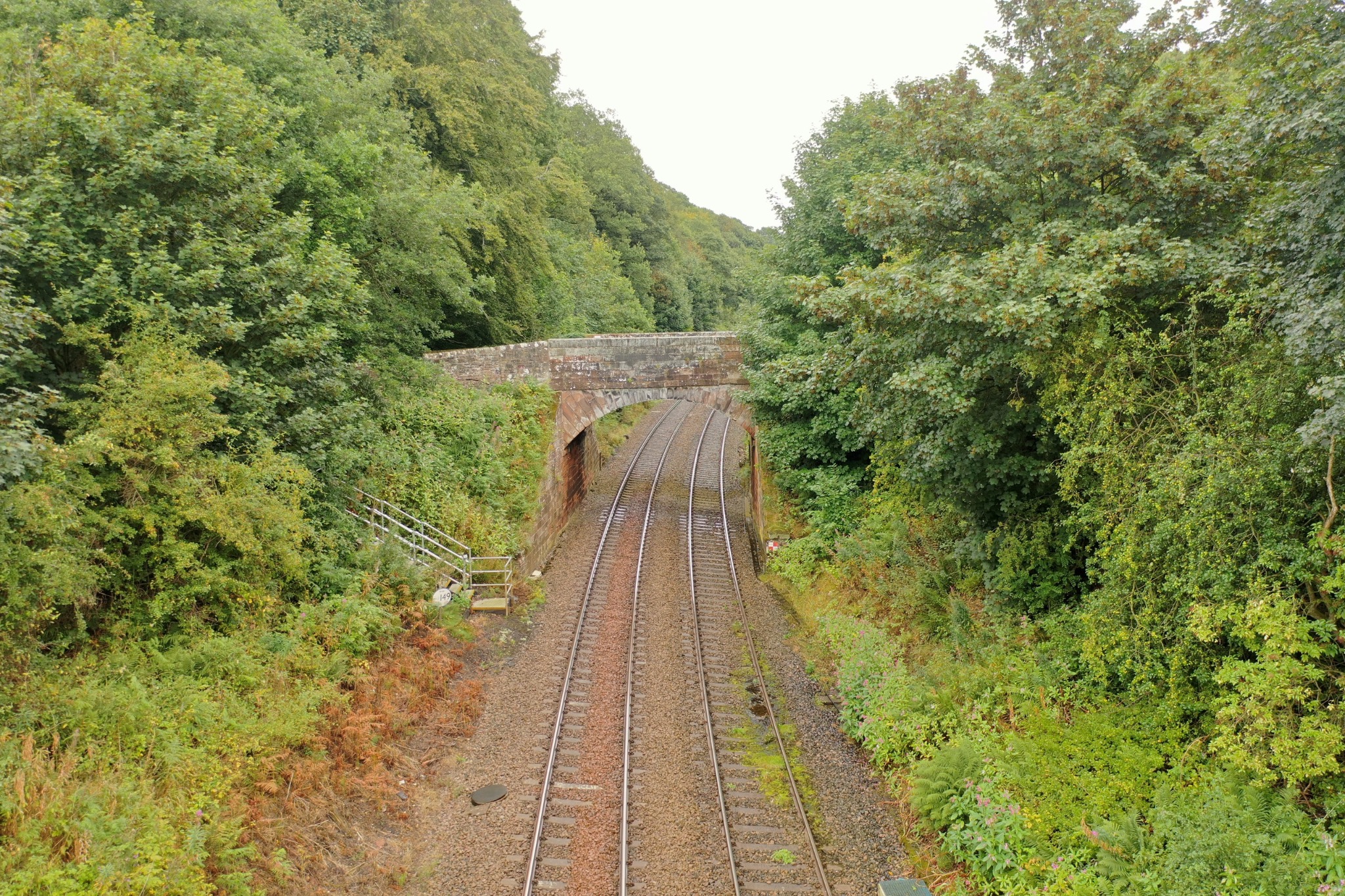
Cowran Bridge, Cowran Cutting and Skellion Bridge survive together as one extraordinary piece of pioneering railway engineering from 1836.
ONE GROUP
Not three isolated structures, but one engineering idea
The Group is best understood as a single surviving work of engineering. The cutting explains the position of the bridges; the bridges record the roads which had to cross the railway; and the masonry preserves the physical solution devised for one of the most difficult parts of the Newcastle & Carlisle Railway.
The original plan was for a tunnel through the Cowran Hills. Waterlogged, unstable sand repeatedly defeated that approach, so the tunnel gave way to an immense open cutting. Cowran Bridge and Skellion Bridge stand approximately where the tunnel portals would have been, bookending the great excavation between them.
Stone overbridge carrying a public road.
The immense excavation and approximately 725 metres of listed stone revetment walls.
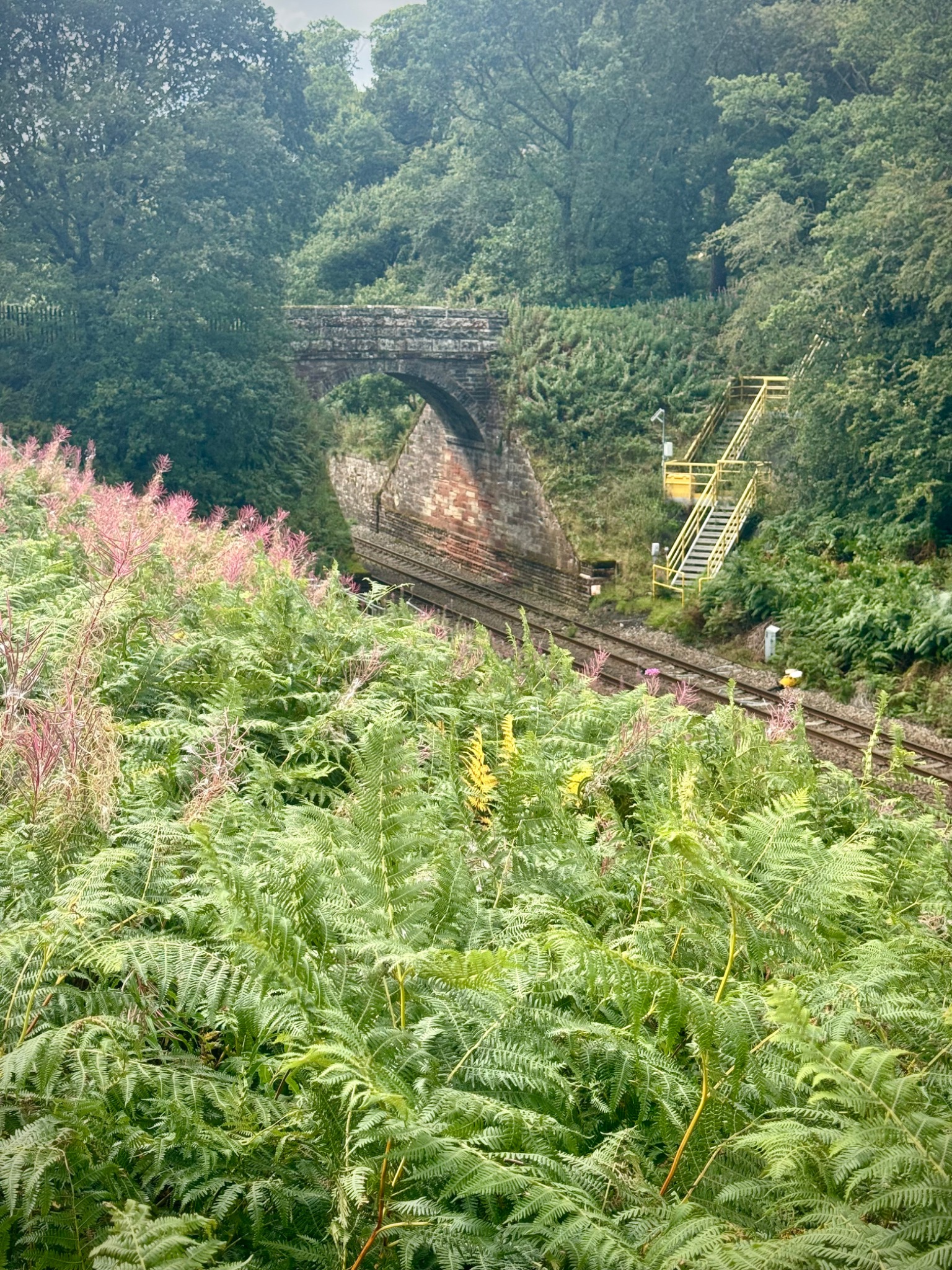
Stone overbridge carrying a bridleway.
COWRAN BRIDGE
The western gateway
Cowran Bridge carries the narrow public road serving Cowranbridge and Hardbank across the railway at the western end of the Group.
Built in local red sandstone, its arch continues through to the carriageway above, creating the pronounced hump which remains a characteristic feature of the road. The bridge is not merely a crossing: with its attached approach walls it forms the western architectural termination of the Cowran engineering work.
Still working
A railway structure which has never become a museum piece
The bridge continues to carry road traffic while trains pass beneath it. Its continuing usefulness is part of its significance.
What happened at Cowran Bridge →COWRAN CUTTING
The engineering challenge that transformed the plan
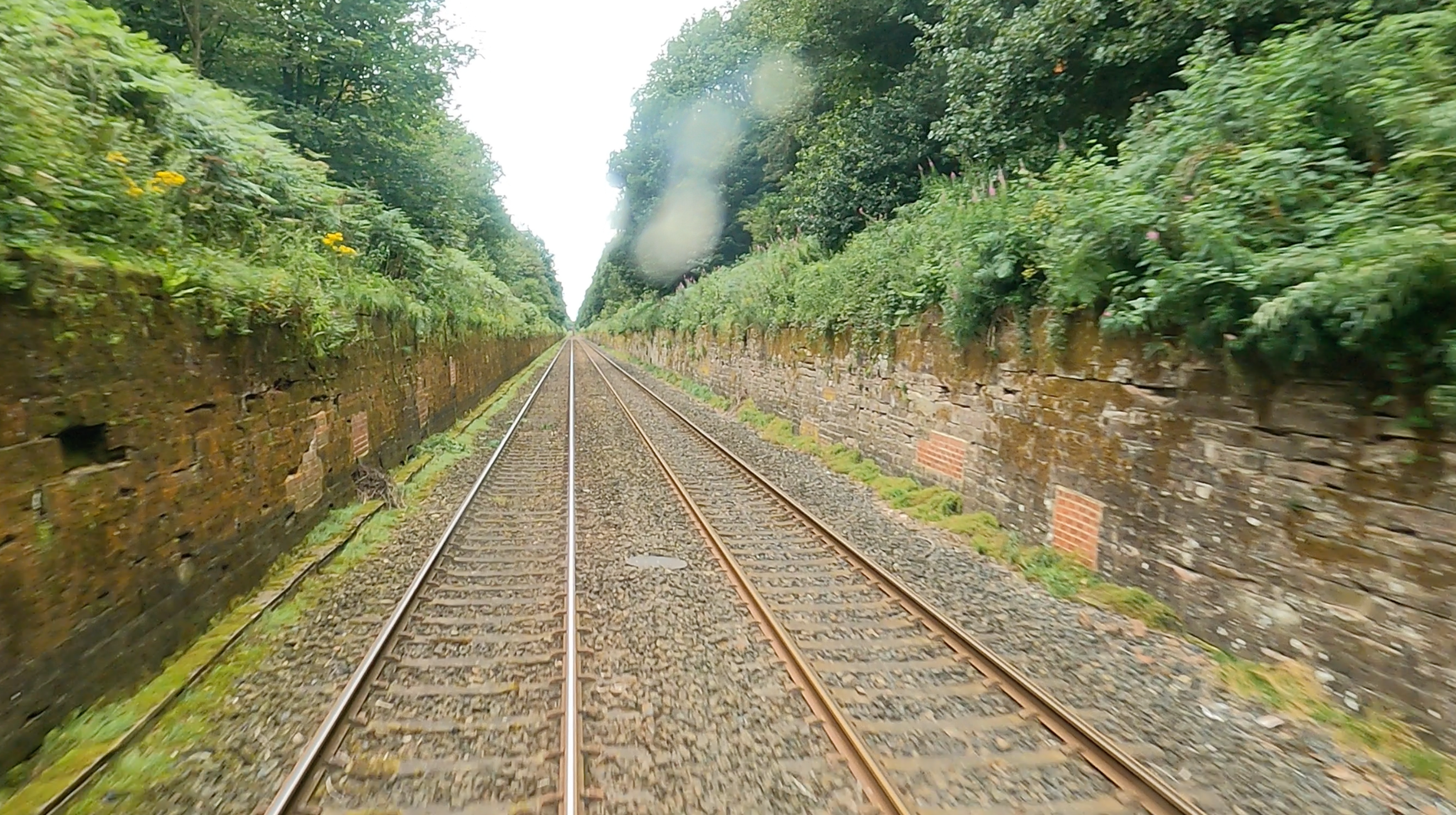
Abandoning the tunnel did not remove the problem. It turned it into one of the greatest civil-engineering undertakings on the line.
Contemporary accounts describe teams working continuously in rotating shifts and the removal of almost a million cubic yards of sand and clay. The wooded landscape now conceals much of the original scale, but the cutting and its masonry still reveal the confidence with which early railway engineers confronted an exceptional obstacle.
SKELLION BRIDGE
The eastern bookend
At the opposite end of the engineering work, Skellion Bridge carries a bridleway over the railway and completes the composition.
Like Cowran Bridge, it is built in local stone and belongs to the same architectural and engineering vocabulary. Its importance is heightened by its relationship with the cutting: the two bridges frame the work approximately where the abandoned tunnel entrances would have stood.
That relationship is why Historic England did not list the bridges as unrelated survivals. They were designated with the cutting walls as one Group.
NATIONAL RECOGNITION
Listed together because the whole matters
The Cowran Group was added to the National Heritage List for England at Grade II on 4 November 2025.
Historic England recognises the two bridges and the historic revetment walls together for their architectural, historic and group value. The designation formalises what the structures themselves show on the ground: they are connected parts of the same pioneering solution.
Explore the Grade II listing →Cowran Bridge
The western overbridge, including the attached road-approach walls described and mapped in the List entry.
Cowran Cutting
Approximately 725 metres of historic stone revetment walls retaining the lower slopes beside the railway.
Skellion Bridge
The eastern overbridge, carrying a bridleway and completing the listed engineering composition.
LOCATION
Three elements, one place
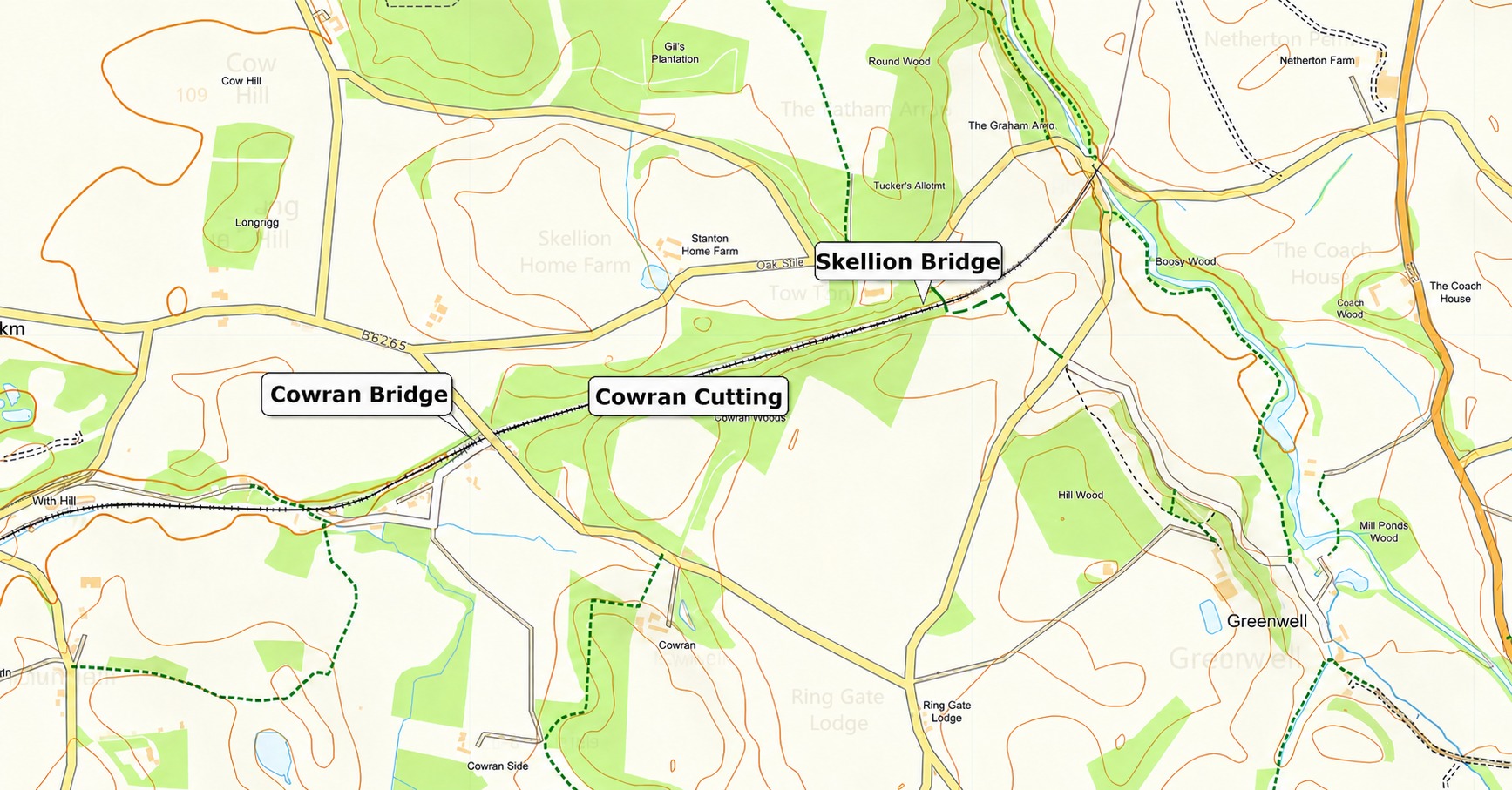
The Group lies on the Newcastle–Carlisle railway near How Mill, east of Carlisle. Cowran Bridge, the cutting and Skellion Bridge can still be read consecutively along the operational line.
NEXT: HISTORY
How did an intended tunnel become this extraordinary surviving railway landscape?
The next part of the story explains why the Newcastle & Carlisle Railway came through Cowran, why the tunnel failed, and how Francis Giles and his workforce created the engineering work that survives today.
Continue to History